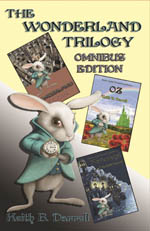
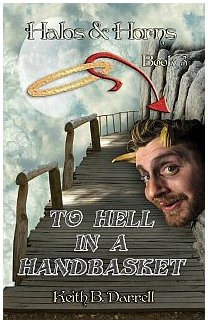
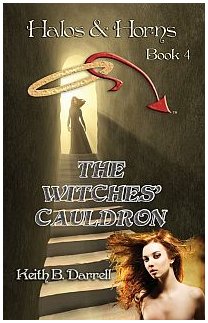
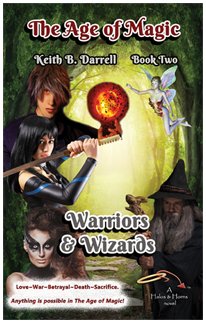
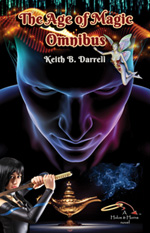
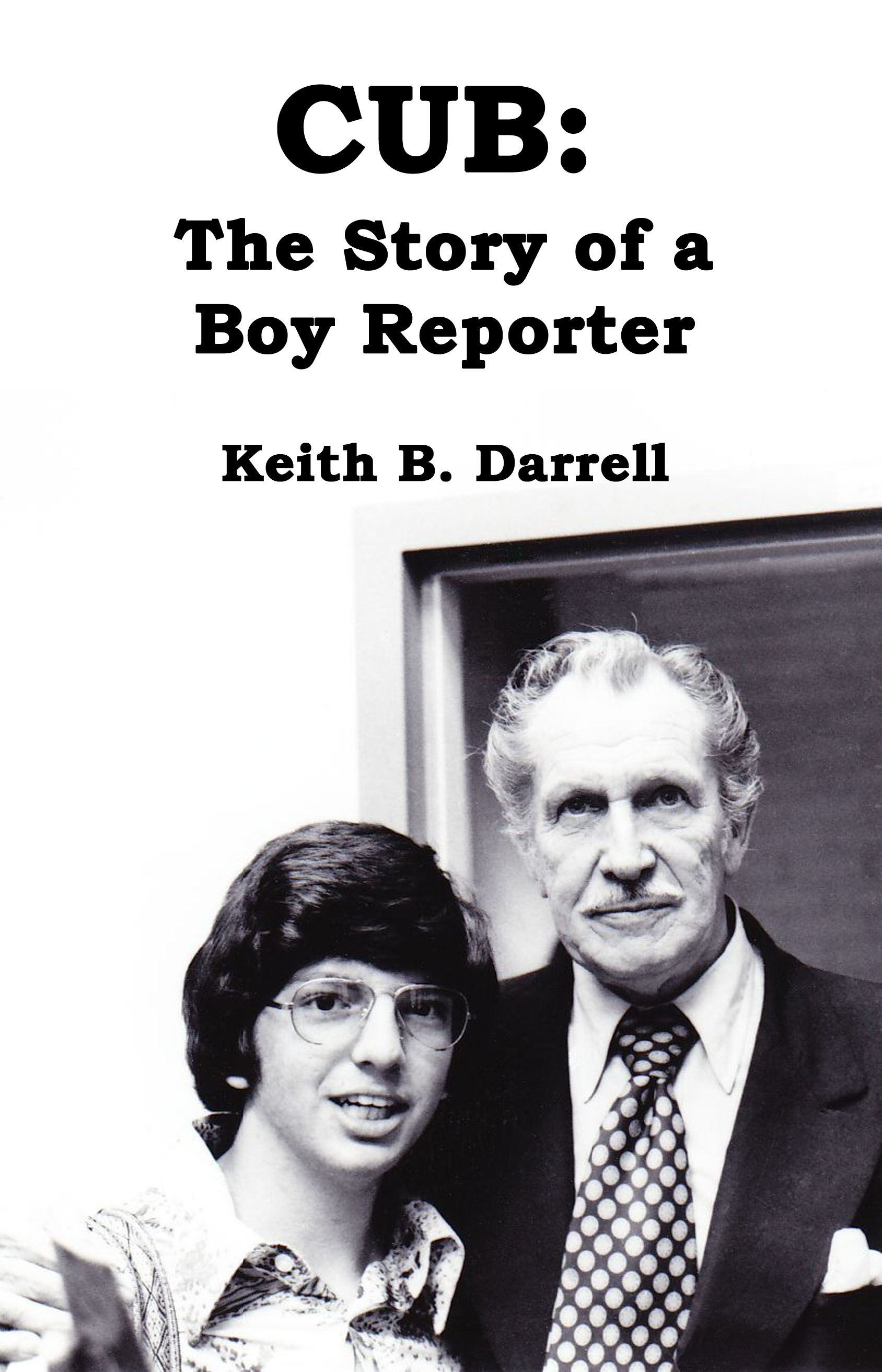



I've been sidelined by the need for unexpected surgery, so I've chosen to delay the official launch of "
The Witches' Cauldron", the fourth book in the
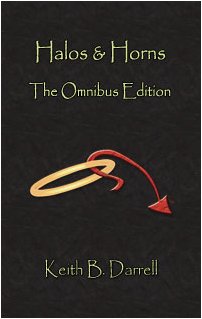
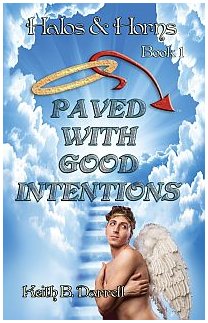
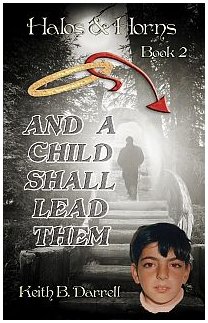
Halos & Horns fantasy saga, until next month when I can more actively promote it. Meanwhile (as we say in fiction), you can pre-order the entire four-volume set at a $10 discount by clicking this
link. All proceeds will go to my surgeon, whose scalpel slices deeper than any critic's pen, lol.
Since I am somewhat indisposed, I'm going to cheat this week and return to the Italian interview with a bit of cut and paste magic. Enjoy the exchange, below. I'll be back in May hawking
"The Witches' Cauldron", so save up your shekels!
Q: Do you purposely write strong female characters?
A: Wow, that’s a good question. I mean, the way you phrased
it. Do I set out to write strong female characters? No, I wouldn't say I have a
feminist agenda. Many of my characters, like Angelique Ward and Nyx, are
deities or supernaturally powered, so they are innately strong, regardless of
their gender. And when I say strong, I don’t mean only physically, although I
think physical strength enables one to be more assertive in nonphysical
encounters.
A lot of their strength comes from who the character is.
Sharon is a cop’s daughter, so she doesn't hesitate to draw a gun and shoot
when Pandora stalks her. Chiyoko’s strength comes not only from being a
vampire, but from her leadership position, as a Nosferatu, Inc. director, and
we get a sense of her almost royal lineage. Valentina is a strong-willed,
no-nonsense ex-KGB agent. I think the exchange that exemplified the strong
female dynamic was the scene where Lilith, the succubus demoness vied against Angelique
for the right to kidnap the infant Alaric. Lilith, who was also Adam’s wife
before Eve, says “I have stood up to the first man, to angels, to God, and to a
plethora of demons. You will not bar my way, Ancient One.” To which, Angelique
replies, “I was ancient when you were created as a mate for Adam. I was ancient
long before this planet we stand on was formed. You shall not defy me, Lilith.”
This isn't a catfight; it’s two lionesses about to tangle. So no, my women
characters aren't in the kitchen baking cookies.
Q: Which of your characters would you like to spend time
with?
A: They’re all unique, so I think it would be entertaining
to spend time with any of them. Watching the angel, Gabriel, and the demon,
Lucifer, bicker would be a treat. Ditto for the changeling, Síofra and the
emere, Asabi. The vampire Pandora would be fun, in a space cadet sort of way.
If I were a kid, I’d hang with Artemus, the boy vampire, and Emma, the teen
witch. A wizard like Merlin or Balthazar would be cool. I’d have a ton of
questions for Metatron, the aspect of God, but I doubt he’d give me any clear
answers I could understand.
Q: Which characters frighten you?
A: All the demons, of course, are scary. Of the vampires,
I’d say Warren was the most vicious. Nathaniel Thornhill, the witch-hunter, is
probably one of the most evil, sadistic characters in the series, other than
Torquemada. Gen. Asad Hashim was human, but absolutely ruthless and murderous.
But I think the characteristics that would frighten me the most are unpredictability
combined with an unbalanced psyche, so Morgana le Fay and The Morrigan would
fall into that category. They’re scary because they are in large part ruled by
their emotions and act impulsively, so they might befriend you one minute and
behead you the next.
Drusilla Twitch was one of my favorite scary characters to
write. Who else could caress Remick’s face with her long, sharp fingernail and
make him stiffen and turn pale? And she has these great one-liners. When Remick
says he had nothing to do with the Empusae attack, she replies, “I realize
that, Mr. Remick. That is why you are still breathing.” Succinct, if not
subtle. When the bogarts tell her they’ve heard tales of her sibling’s
animosity toward her, she asks if they’ve also heard tales of her kindness and
mercy. When they admit they haven’t, she replies “That’s because there are no
such tales” before destroying them. Even Morgana found Drusilla’s gnarled
fingers crushing her larynx, her long sharp nails biting into her neck, and
droplets of Morgana’s blood trickling down her neck within minutes of meeting
her, as Drusilla asked, “Tell me who you are and why I might not wish to kill
you.” Succinct, but not subtle.
Q: Would you consider yourself a plot-driven writer or a
character-driven writer?
A: One of my writing friends and I have this debate all the
time. The correct answer is you need both a strong plot and well-defined
characters. My position is characterization that reveals the human condition
trumps plot. I like to create unique characters with their own characteristics,
foibles, and motivations and then place them together in a setting, sit back
and take notes as they interact. Usually, the story writes itself from that
point on, and I’m more the stenographer than author. That’s not to say they
wander mapless throughout the pages without a plot. I draft a skeletal outline
of the novel and each chapter, so I know where we’re headed and how we’ll get
there.
Dialogue is extremely important. The characters’ words have
to reflect who they are. If either of two characters could have made the
statement, then the author hasn’t clearly defined his characters. Síofra is a
cynical, ancient changeling, while Kaya is a sheltered, naïve, wide-eyed
10-year-old girl. When they converse, Kaya can’t make a cynical comment or
appear too worldly. When they meet someone, Kaya is immediately trusting while
Síofra is wary. This is who they are, and who they are determines how they will
react in a given scenario. If you meet them in the woods, a bubbly Kaya will
invite you home for dinner as Síofra casts an untrusting, wary eye on you.
Q: Have you ever regretted killing off a character?
A: I felt a twinge killing off Maudie, because she was such
a likable character and I felt she had potential. But I realized some of that
potential could be explored in other ways, such as flashbacks.
When it came to killing off a major character toward the end
of the
Halos and Horns arc, I did ask myself,
Do you really want to kill off a
major character? The character could have worked indefinitely as a staple to
bring the characters into different plots, but in terms of advancing the story,
I thought that character’s potential had been nearly depleted. The death
created a new dynamic among some existing characters, and as the saga continues
into the next arcs, I think it will lead to a healthier, evolving storyline.
Q: Which locale in Halos and Horns would you like to
visit?
A: I’d love to prowl around Absalonis’ curio shop in
Copenhagen and see the range of mystic artifacts he has. Actually, I’d love to
return to Copenhagen and prowl around the city.
(Laughs). I had some memorable times there in my younger days. The Dreamscape –
walking through people’s dreams. That could be fun, or terrifying, especially if I
landed in my accountant’s dreams – have you seen
Donald Duck in
Mathamagic Land? Heaven and Hell, of course. And Camelot. As a child, I wanted
to be Mark Twain’s
Connecticut Yankee in King Arthur’s Court.