|
|
To Hell in a Handbasket Picking up where And a Child Shall Lead Them left off, the third installment in the the Halos & Horns fantasy series finds the angel Gabe Horn and demon Lou Cypher questioning their roles, as each embarks on a personal journey to discover his humanity. The cast of characters must adjust to the changes brought about at the conclusion of the previous installment. With the Devil taking charge of Heaven, Gabriel rebels, searching for answers in the most unlikely of places. As Samantha ponders his proposal, Lucifer finds himself a reluctant ruler. Síofra, the Irish changeling, must adjust to life hiding from Alaric in Japan with the ingénue Kaya, unaware of the girl's deadly secret. A familiar figure rises from obscurity to seize the reins of power at Nosferatu, Inc., while Morgana le Fay seeks vengeance for the fate of her son, Mordred.
|
.

Keith's Books
Click on the cover to jump to the book description.
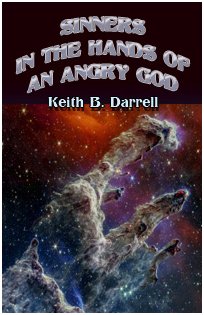


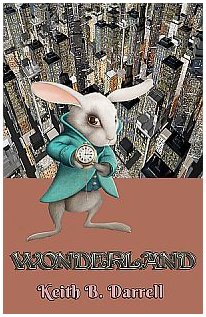


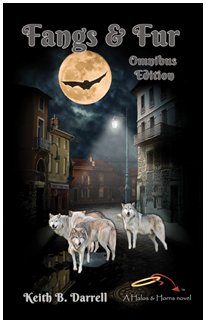




Showing posts with label To Hell In A Handbasket. Show all posts
Showing posts with label To Hell In A Handbasket. Show all posts
Tuesday, June 18, 2024
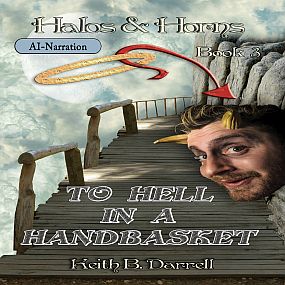
Thursday, August 14, 2014
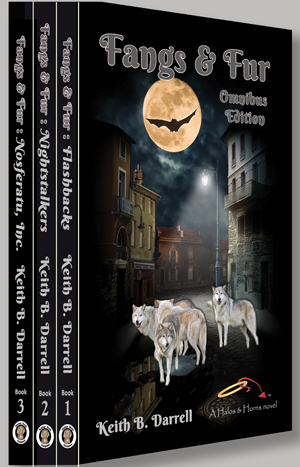
Just Published! The Halos & Horns Omnibus – In Color!
Halos and Horns: The Omnibus Edition has just been published
in a deluxe paperback edition and I cannot recommend any book more highly than
this one. Readers of this blog already know my passion for the Halos and
Horns fantasy saga, which I have spent four years crafting. I've often
compared this work of episodic fiction to television, likening each chapter to
a TV episode, and each book to an entire TV season. Continuing that analogy, Halos and Horns: The Omnibus Edition is the boxed DVD set.
An omnibus is a volume containing several novels previously
published separately. That means you can expect it to be a big book. A very big
book. Obviously, an omnibus will be a lot heavier than a single book and carry
a larger price tag (though cheaper than buying the individual books). Its sheer
size can be intimidating. Imagine the complete works of Shakespeare, or
Dickens, or whomever your favorite author might be, sandwiched between the
covers of a single book. It’s like buying a DVD set of your favorite TV series
or movie trilogy. While potentially overwhelming, there’s something magical
about that sense of completeness you get by knowing you hold an entire creative
work within your hands.
All four books in the saga are included in the omnibus,
along with never before published essays on the series, an interview with the
author, and a massive Guide to the Halos and Horns Multiverse. The
omnibus also includes the novelette, The Pandora Chronicles, a sneak
peak at the forthcoming Fangs and Fur fantasy series, a spin-off devoted
to the vampires and werewolves of the Halos & Horns multiverse. But
what really makes this 904-page book stand out are the 61 stunning illustration
that accompany the stories, in breathtaking color.
For the first time, you can read the entire story, from
beginning to end, in one book. All the pieces come together as the saga
unfolds, the color illustrations vividly bring the characters and settings to
life, and the essays and guide take you backstage, behind the scenes, providing
essential background for the saga. What’s it about? I’m glad you asked. I
proudly present, Halos and Horns: The Omnibus Edition:
There are more things in Heaven and Earth, Horatio, than
are dreamt of in your philosophy." - Hamlet (Act 1, Scene 5). A naïve
angel and amoral demon discover the truth of Shakespeare's words, when a wager
between God and the Devil lands them on Earth. In the guise of Las Vegas
private eyes "Gabe Horn" and "Lou Cypher", the archangel
Gabriel and trickster demon Lucifer embark on personal quests of their own in
search of their humanity. Their personal journey is also a physical one,
spanning both time and dimensions, through the centuries to Camelot and 17th
century Salem, exploring the seven Heavens, the nine levels of Hell, the Dark
Dimension of the ancient Dark Gods, Thenesia – an ancient land of swords and
sorcery, the somnolent realm of the Dreamscape, the Otherworld – home of the
Fae, and the eerie emptiness of Limbo.
Beneath the prosaic veneer of urban life, mortal humans live
in blissful ignorance alongside preternatural and supernatural creatures:
warlocks and witches, vampires, werewolves, the Fae, kitsune, and creatures
whispered of in myths of African, Irish, and Japanese cultures. Seers gaze at
the Sands of Time as the golden grains tumble through the mystical hourglass,
seeking to divine what the Fates have woven. Through these memorable characters
and exotic settings, the author explores the nature of good and evil, free will
versus predetermination, man's inhumanity to man, universal versus moral
relativism, nature versus nurture, loss of innocence, coming of age, death,
love and friendship, the quest for power, individualism, sacrifice, and faith
versus doubt, among other literary themes. This Omnibus Edition collects all
four volumes in the Halos & Horns fantasy saga, replete with 61 new color
illustrations; the "Guide to the Halos & Horns Multiverse"
detailing each character, place, and object; previously unpublished essays by
the author; and the novelette The Pandora Chronicles, a preview of the
forthcoming spin-off trilogy, Fangs & Fur.
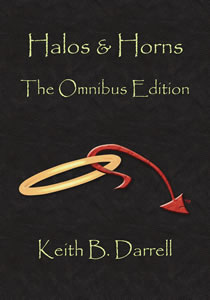
Available online from Barnes &
Noble and Amazon.
Sunday, May 12, 2013
Four Years In The Making.... Concludes Today!
The waiting is over!
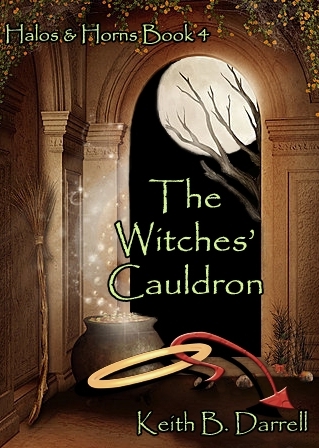
The Witches' Cauldron, the fourth and final book in the Halos and Horns fantasy series has just been published. As you read this, valiant postmen are lifting heavy cartons of the paperback edition of The Witches' Cauldron and delivering them to a bookstore near you. Amazon and Barnes & Noble's Web sites will have at least one copy available soon, as well. For those who can't wait for the postmen to complete their Herculean task, you can download a copy HERE. Go ahead, I'll wait.
Got your copy loaded onto your Kindle? Good, now here's what you need to know. Pay attention... there'll be a quiz later. The Witches' Cauldron is Book 4 in the Halos & Horns story arc. That means, if you haven't read the first three books, it will be like coming in on the end of a really good movie. So make sure you order or download Paved With Good Intentions (Book 1), And A Child Shall Lead Them (Book 2), and To Hell In A Handbasket (Book 3) before reading The Witches' Cauldron. Honest, you'll thank me. While I think The Witches' Cauldron may be the best fiction I've ever written, it'll make absolutely no sense to you if you don't already know the characters and storylines. (This would be a good spot to slip in Amber Book Company is having a four-book set sale HERE, but that would be a shameless plug, so I won't mention it. You didn't hear it from me.)
I'll post the links when Amazon and Barnes & Noble have the paperback edition in stock, but meantime all four books are available for your Kindle (see links elsewhere on this page). Now, here's the rest of what you need to know:
The conclusion of the Halos & Horns story arc is only the beginning! The next story arc will be called Fangs & Fur and it will spotlight the vampires and werewolves of the Halos & Horns universe. A Halos & Horns audiobook version is planned. For you gamers out there, a Halos & Horns game is in development. Between the two arcs, we will release a novelette, The Pandora Chronicles, which takes place after the events in The Witches' Cauldron. The story is done and the cover art looks fantastic. There are also plans to develop comic books set in the Halos & Horns universe. Speaking of artwork, a limited edition omnibus edition is planned, which will collect the entire saga, with illustrations and annotations.
So what are you waiting for? An invitation? This is it! You are cordially invited to hours of thrilling, dramatic, funny, and poignant, action and adventure with the strangest cast of characters in the most unusual storylines you've ever read.

The Witches' Cauldron, the fourth and final book in the Halos and Horns fantasy series has just been published. As you read this, valiant postmen are lifting heavy cartons of the paperback edition of The Witches' Cauldron and delivering them to a bookstore near you. Amazon and Barnes & Noble's Web sites will have at least one copy available soon, as well. For those who can't wait for the postmen to complete their Herculean task, you can download a copy HERE. Go ahead, I'll wait.
Got your copy loaded onto your Kindle? Good, now here's what you need to know. Pay attention... there'll be a quiz later. The Witches' Cauldron is Book 4 in the Halos & Horns story arc. That means, if you haven't read the first three books, it will be like coming in on the end of a really good movie. So make sure you order or download Paved With Good Intentions (Book 1), And A Child Shall Lead Them (Book 2), and To Hell In A Handbasket (Book 3) before reading The Witches' Cauldron. Honest, you'll thank me. While I think The Witches' Cauldron may be the best fiction I've ever written, it'll make absolutely no sense to you if you don't already know the characters and storylines. (This would be a good spot to slip in Amber Book Company is having a four-book set sale HERE, but that would be a shameless plug, so I won't mention it. You didn't hear it from me.)
I'll post the links when Amazon and Barnes & Noble have the paperback edition in stock, but meantime all four books are available for your Kindle (see links elsewhere on this page). Now, here's the rest of what you need to know:
The conclusion of the Halos & Horns story arc is only the beginning! The next story arc will be called Fangs & Fur and it will spotlight the vampires and werewolves of the Halos & Horns universe. A Halos & Horns audiobook version is planned. For you gamers out there, a Halos & Horns game is in development. Between the two arcs, we will release a novelette, The Pandora Chronicles, which takes place after the events in The Witches' Cauldron. The story is done and the cover art looks fantastic. There are also plans to develop comic books set in the Halos & Horns universe. Speaking of artwork, a limited edition omnibus edition is planned, which will collect the entire saga, with illustrations and annotations.
So what are you waiting for? An invitation? This is it! You are cordially invited to hours of thrilling, dramatic, funny, and poignant, action and adventure with the strangest cast of characters in the most unusual storylines you've ever read.
Monday, April 29, 2013
The Italian Interview: Characters in Novels
I've been sidelined by the need for unexpected surgery, so I've chosen to delay the official launch of "The Witches' Cauldron", the fourth book in the Halos & Horns fantasy saga, until next month when I can more actively promote it. Meanwhile (as we say in fiction), you can pre-order the entire four-volume set at a $10 discount by clicking this link. All proceeds will go to my surgeon, whose scalpel slices deeper than any critic's pen, lol.
Since I am somewhat indisposed, I'm going to cheat this week and return to the Italian interview with a bit of cut and paste magic. Enjoy the exchange, below. I'll be back in May hawking "The Witches' Cauldron", so save up your shekels!
Q: Do you purposely write strong female characters?
A: Wow, that’s a good question. I mean, the way you phrased it. Do I set out to write strong female characters? No, I wouldn't say I have a feminist agenda. Many of my characters, like Angelique Ward and Nyx, are deities or supernaturally powered, so they are innately strong, regardless of their gender. And when I say strong, I don’t mean only physically, although I think physical strength enables one to be more assertive in nonphysical encounters.
A lot of their strength comes from who the character is. Sharon is a cop’s daughter, so she doesn't hesitate to draw a gun and shoot when Pandora stalks her. Chiyoko’s strength comes not only from being a vampire, but from her leadership position, as a Nosferatu, Inc. director, and we get a sense of her almost royal lineage. Valentina is a strong-willed, no-nonsense ex-KGB agent. I think the exchange that exemplified the strong female dynamic was the scene where Lilith, the succubus demoness vied against Angelique for the right to kidnap the infant Alaric. Lilith, who was also Adam’s wife before Eve, says “I have stood up to the first man, to angels, to God, and to a plethora of demons. You will not bar my way, Ancient One.” To which, Angelique replies, “I was ancient when you were created as a mate for Adam. I was ancient long before this planet we stand on was formed. You shall not defy me, Lilith.” This isn't a catfight; it’s two lionesses about to tangle. So no, my women characters aren't in the kitchen baking cookies.
Q: Which of your characters would you like to spend time with?
A: They’re all unique, so I think it would be entertaining to spend time with any of them. Watching the angel, Gabriel, and the demon, Lucifer, bicker would be a treat. Ditto for the changeling, Síofra and the emere, Asabi. The vampire Pandora would be fun, in a space cadet sort of way. If I were a kid, I’d hang with Artemus, the boy vampire, and Emma, the teen witch. A wizard like Merlin or Balthazar would be cool. I’d have a ton of questions for Metatron, the aspect of God, but I doubt he’d give me any clear answers I could understand.
Q: Which characters frighten you?
A: All the demons, of course, are scary. Of the vampires, I’d say Warren was the most vicious. Nathaniel Thornhill, the witch-hunter, is probably one of the most evil, sadistic characters in the series, other than Torquemada. Gen. Asad Hashim was human, but absolutely ruthless and murderous. But I think the characteristics that would frighten me the most are unpredictability combined with an unbalanced psyche, so Morgana le Fay and The Morrigan would fall into that category. They’re scary because they are in large part ruled by their emotions and act impulsively, so they might befriend you one minute and behead you the next.
Drusilla Twitch was one of my favorite scary characters to write. Who else could caress Remick’s face with her long, sharp fingernail and make him stiffen and turn pale? And she has these great one-liners. When Remick says he had nothing to do with the Empusae attack, she replies, “I realize that, Mr. Remick. That is why you are still breathing.” Succinct, if not subtle. When the bogarts tell her they’ve heard tales of her sibling’s animosity toward her, she asks if they’ve also heard tales of her kindness and mercy. When they admit they haven’t, she replies “That’s because there are no such tales” before destroying them. Even Morgana found Drusilla’s gnarled fingers crushing her larynx, her long sharp nails biting into her neck, and droplets of Morgana’s blood trickling down her neck within minutes of meeting her, as Drusilla asked, “Tell me who you are and why I might not wish to kill you.” Succinct, but not subtle.
Q: Would you consider yourself a plot-driven writer or a character-driven writer?
A: One of my writing friends and I have this debate all the time. The correct answer is you need both a strong plot and well-defined characters. My position is characterization that reveals the human condition trumps plot. I like to create unique characters with their own characteristics, foibles, and motivations and then place them together in a setting, sit back and take notes as they interact. Usually, the story writes itself from that point on, and I’m more the stenographer than author. That’s not to say they wander mapless throughout the pages without a plot. I draft a skeletal outline of the novel and each chapter, so I know where we’re headed and how we’ll get there.
Dialogue is extremely important. The characters’ words have to reflect who they are. If either of two characters could have made the statement, then the author hasn’t clearly defined his characters. Síofra is a cynical, ancient changeling, while Kaya is a sheltered, naïve, wide-eyed 10-year-old girl. When they converse, Kaya can’t make a cynical comment or appear too worldly. When they meet someone, Kaya is immediately trusting while Síofra is wary. This is who they are, and who they are determines how they will react in a given scenario. If you meet them in the woods, a bubbly Kaya will invite you home for dinner as Síofra casts an untrusting, wary eye on you.
Q: Have you ever regretted killing off a character?
A: I felt a twinge killing off Maudie, because she was such a likable character and I felt she had potential. But I realized some of that potential could be explored in other ways, such as flashbacks.
When it came to killing off a major character toward the end of the Halos and Horns arc, I did ask myself, Do you really want to kill off a major character? The character could have worked indefinitely as a staple to bring the characters into different plots, but in terms of advancing the story, I thought that character’s potential had been nearly depleted. The death created a new dynamic among some existing characters, and as the saga continues into the next arcs, I think it will lead to a healthier, evolving storyline.
Q: Which locale in Halos and Horns would you like to visit?
A: I’d love to prowl around Absalonis’ curio shop in Copenhagen and see the range of mystic artifacts he has. Actually, I’d love to return to Copenhagen and prowl around the city. (Laughs). I had some memorable times there in my younger days. The Dreamscape – walking through people’s dreams. That could be fun, or terrifying, especially if I landed in my accountant’s dreams – have you seen Donald Duck in Mathamagic Land? Heaven and Hell, of course. And Camelot. As a child, I wanted to be Mark Twain’s Connecticut Yankee in King Arthur’s Court.
Since I am somewhat indisposed, I'm going to cheat this week and return to the Italian interview with a bit of cut and paste magic. Enjoy the exchange, below. I'll be back in May hawking "The Witches' Cauldron", so save up your shekels!
Q: Do you purposely write strong female characters?
A: Wow, that’s a good question. I mean, the way you phrased it. Do I set out to write strong female characters? No, I wouldn't say I have a feminist agenda. Many of my characters, like Angelique Ward and Nyx, are deities or supernaturally powered, so they are innately strong, regardless of their gender. And when I say strong, I don’t mean only physically, although I think physical strength enables one to be more assertive in nonphysical encounters.
A lot of their strength comes from who the character is. Sharon is a cop’s daughter, so she doesn't hesitate to draw a gun and shoot when Pandora stalks her. Chiyoko’s strength comes not only from being a vampire, but from her leadership position, as a Nosferatu, Inc. director, and we get a sense of her almost royal lineage. Valentina is a strong-willed, no-nonsense ex-KGB agent. I think the exchange that exemplified the strong female dynamic was the scene where Lilith, the succubus demoness vied against Angelique for the right to kidnap the infant Alaric. Lilith, who was also Adam’s wife before Eve, says “I have stood up to the first man, to angels, to God, and to a plethora of demons. You will not bar my way, Ancient One.” To which, Angelique replies, “I was ancient when you were created as a mate for Adam. I was ancient long before this planet we stand on was formed. You shall not defy me, Lilith.” This isn't a catfight; it’s two lionesses about to tangle. So no, my women characters aren't in the kitchen baking cookies.
Q: Which of your characters would you like to spend time with?
A: They’re all unique, so I think it would be entertaining to spend time with any of them. Watching the angel, Gabriel, and the demon, Lucifer, bicker would be a treat. Ditto for the changeling, Síofra and the emere, Asabi. The vampire Pandora would be fun, in a space cadet sort of way. If I were a kid, I’d hang with Artemus, the boy vampire, and Emma, the teen witch. A wizard like Merlin or Balthazar would be cool. I’d have a ton of questions for Metatron, the aspect of God, but I doubt he’d give me any clear answers I could understand.
Q: Which characters frighten you?
A: All the demons, of course, are scary. Of the vampires, I’d say Warren was the most vicious. Nathaniel Thornhill, the witch-hunter, is probably one of the most evil, sadistic characters in the series, other than Torquemada. Gen. Asad Hashim was human, but absolutely ruthless and murderous. But I think the characteristics that would frighten me the most are unpredictability combined with an unbalanced psyche, so Morgana le Fay and The Morrigan would fall into that category. They’re scary because they are in large part ruled by their emotions and act impulsively, so they might befriend you one minute and behead you the next.
Drusilla Twitch was one of my favorite scary characters to write. Who else could caress Remick’s face with her long, sharp fingernail and make him stiffen and turn pale? And she has these great one-liners. When Remick says he had nothing to do with the Empusae attack, she replies, “I realize that, Mr. Remick. That is why you are still breathing.” Succinct, if not subtle. When the bogarts tell her they’ve heard tales of her sibling’s animosity toward her, she asks if they’ve also heard tales of her kindness and mercy. When they admit they haven’t, she replies “That’s because there are no such tales” before destroying them. Even Morgana found Drusilla’s gnarled fingers crushing her larynx, her long sharp nails biting into her neck, and droplets of Morgana’s blood trickling down her neck within minutes of meeting her, as Drusilla asked, “Tell me who you are and why I might not wish to kill you.” Succinct, but not subtle.
Q: Would you consider yourself a plot-driven writer or a character-driven writer?
A: One of my writing friends and I have this debate all the time. The correct answer is you need both a strong plot and well-defined characters. My position is characterization that reveals the human condition trumps plot. I like to create unique characters with their own characteristics, foibles, and motivations and then place them together in a setting, sit back and take notes as they interact. Usually, the story writes itself from that point on, and I’m more the stenographer than author. That’s not to say they wander mapless throughout the pages without a plot. I draft a skeletal outline of the novel and each chapter, so I know where we’re headed and how we’ll get there.
Dialogue is extremely important. The characters’ words have to reflect who they are. If either of two characters could have made the statement, then the author hasn’t clearly defined his characters. Síofra is a cynical, ancient changeling, while Kaya is a sheltered, naïve, wide-eyed 10-year-old girl. When they converse, Kaya can’t make a cynical comment or appear too worldly. When they meet someone, Kaya is immediately trusting while Síofra is wary. This is who they are, and who they are determines how they will react in a given scenario. If you meet them in the woods, a bubbly Kaya will invite you home for dinner as Síofra casts an untrusting, wary eye on you.
Q: Have you ever regretted killing off a character?
A: I felt a twinge killing off Maudie, because she was such a likable character and I felt she had potential. But I realized some of that potential could be explored in other ways, such as flashbacks.
When it came to killing off a major character toward the end of the Halos and Horns arc, I did ask myself, Do you really want to kill off a major character? The character could have worked indefinitely as a staple to bring the characters into different plots, but in terms of advancing the story, I thought that character’s potential had been nearly depleted. The death created a new dynamic among some existing characters, and as the saga continues into the next arcs, I think it will lead to a healthier, evolving storyline.
Q: Which locale in Halos and Horns would you like to visit?
A: I’d love to prowl around Absalonis’ curio shop in Copenhagen and see the range of mystic artifacts he has. Actually, I’d love to return to Copenhagen and prowl around the city. (Laughs). I had some memorable times there in my younger days. The Dreamscape – walking through people’s dreams. That could be fun, or terrifying, especially if I landed in my accountant’s dreams – have you seen Donald Duck in Mathamagic Land? Heaven and Hell, of course. And Camelot. As a child, I wanted to be Mark Twain’s Connecticut Yankee in King Arthur’s Court.
Sunday, April 21, 2013
The Italian Interview, Part Two
(Continuing the conversation from last time)
Q: Who was you favorite character to write?
A: That’s hard to say; I enjoyed them all. I think which
ever one I was writing at the time became my favorite. Of course, it’s always
more fun to write the naughtier characters. I found myself more drawn to
Lucifer than Gabriel, especially in the beginning. An angel is often presumed,
incorrectly if one studies the mythology, to be the personification of
perfection. Characterization is best demonstrated by one’s flaws, and perhaps,
a story that shows how those flaws are overcome or dealt with. In Gabriel’s
case, I had to instill a flaw – doubt. That’s possibly the greatest flaw an
angel could have; it threatens the whole fabric of a reality structured on
belief.
Lucifer, on the other hand, is the guy born on the wrong
side of the tracks. I've always contemplated how fortunate I was to be born in
America, a land of wealth and opportunity, and not in Rwanda or Haiti. Where
you’re born is the luck of the draw; it’s something you have no control over.
Lucifer, was a demon born in Hell but he aspires for a better existence. To
obtain that, he has to earn it, raising the nature versus nurture question. Are
we who we are because of genetics or our environment? If we change our
environment, can we change, through exercise of free will, or is our fate
predestined? That’s a theme throughout the series, and not just for Lucifer.
Morgana struck me as a very flawed character. She starts out
as a healer and savior and ends as a villainess. Her father was a brute. Her
mother died while she was relatively young and she blamed her half-brother
Arthur for her death, once she found out his birth was the cause. She becomes
consumed with hatred and desirous of revenge against Arthur, Uther, and Merlin.
She sleeps with her half-brother, which would send most people into therapy for
years, and is overly obsessed with her son, Mordred. She is rejected by
Lancelot and her mentor, Nimue and only finds acceptance among the Fae – and
even then, probably more from fear than admiration. She’s haunted by
nightmarish patchwork visions she doesn't always understand that warp her sense
of reality. Is it any wonder she gradually descends from innocence into
darkness?
The comic relief characters were a blast to write. Pandora
is especially fun because you never know what’s going to come out of her mouth.
Both Pandora and Síofra are insouciant characters, but Pandora is lighthearted,
a bit of a space cadet. While Pandora approaches life in a carefree, cheerful
manner, Síofra is blithely unconcern with anyone other than herself.
Q: Your characters often formed disparate pairings.
A: I found I could achieve both good dialogue and
interesting plotting by matching characters with opposite attributes. Teaming
up an angel and a demon; pairing the selfish, corrupted changeling Síofra with
the innocent, naïve Kaya; or the innocent, naïve white angel Cassiopeia with
the more worldly, black emere, Asabi. The level-headed Sharon and the
scatter-brained Pandora; the Twitch sisters: Calliope, representing youth and
purity, Samantha, representing maternal maturity, and Drusilla, aged and
ruthless.
Q: Or Remick and Callaghan. That struck me as an unlikely
combination.
A: Literally the Odd Couple. The chauffeur and the tramp. But
they worked surprisingly well together.
Q: And in the Middle East, of all places. I noticed you use
a variety of locales in the series.
A: Las Vegas serves as the home base, but parts of the book
take place in Heaven and Hell. I incorporated global mythologies into the
series, including many Japanese legends, so there are scenes in Japan, too.
Some of the time travel takes the reader to Camelot, so England is visited, as
well.
Q: But not Italy?
A: You can tell your readers that oversight will be
corrected in future story arcs. I’m not sure how I would incorporate Italy into
the series, but I did have some Roman vampires in the first book and some of
the enchantments use pigeon Latin.
Q: Pigeon Latin?
A: It’s been a long time since I studied Latin, so I’m sure
my cases were probably flawed, but fortunately few readers will notice. I did
have someone correct me on the Hebrew, though. That wasn't entirely my fault.
Hebrew is read from right-to-left. I wrote it correctly, but the software
program flipped the letters. Fortunately, the proofreader caught it. But it’s
very hard to find a proficient Latin proofreader.
Q: (Laughter). That would not be a problem in Italy.
A: (Laughter). In that case, you’re hired.
Sunday, April 14, 2013
The Italian Interview, Part One
Halos & Horns has become one of my passions and I never
tire of talking about it, or the craft of writing in general. Which is
fortunate, because I've given a lengthy interview to an Italian journalist. I've secured permission to print the salient portions dealing with Halos &
Horns here, which I shall do over the next two installments of my blog. I
don’t know when the full Italian version will appear or how much of what you
read here might be edited out. Of course, even after it’s published, I won’t be
able to read it, since it’ll be in Italian, lol.
This is not merely an attempt to fill blog space while I’m
writing novels (although it will give me a bit of breathing space and you
something entertaining to read). What I particularly enjoyed about this
interview was, unlike many American interviewers who rattle off canned questions
(“Who was your greatest influence?”), this interviewer had actually read my books and posed intelligent questions about specific themes, plotting, and
characterization. So, I had a chance to talk about something I’m passionate
about, and now I get the chance to share that passion with you over the next
few installments.
Q: Halos & Horns draws concepts from diverse
mythologies. What are the philosophical underpinnings of the themes in the
series?
A: You've actually raised two questions there, so let me
tackle them in order. I didn't want to write just another vampire and werewolf
book, so I combed through the legends and myths of many cultures to bring my
characters and creatures to life. Ancient philosophers postulated truth and
reality are perceived differently from diverse points of view and no one
viewpoint is the sole truth. In that vein, all these myths coexist within the
universe I have created. Rather than contradicting each other, they complement
one another. In the Halos & Horns universe -- or multiverse, as I like to
think of it -- African and Native American legends blend seamlessly with
Japanese, Greek, Roman, and Norse mythology, Eastern European supernatural
legends, and Judeo-Christian mythos. At one point, I incorporated the Hindu god
Chitragupta into the storyline. All of these myths were, or are still, held as
religious dogma by substantial populations. The Greek, Roman, and Norse
pantheons were the religions of their respective day and taken quite seriously
by the populace. Zeus, Jupiter, and Odin were prayed to and worshiped as
devoutly and with the same reverence as many do God and Jesus today. So in my
saga, they are all given equal weight and veracity; there is no “correct”
religion. Instead, all the belief constructs are part of a greater scheme.
Q: So today’s religions are tomorrow’s mythologies. Would
you say moral relativism was one of your major themes?
A: That’s definitely a theme explored in the series. On the
most basic level, at the outset I toy with the themes of good and evil by
introducing an angel and a demon as my primary protagonists. “What is good, and
what is evil?” is a theme I've addressed in several of my works, especially my
flash fiction series, A Matter of Perspective. Here, I focused on the
concepts of predetermination versus free will. Does one choose to be good or
evil, or is that choice already made for him? It’s like the nature versus
nurture argument. Can a demon change his stripes and choose a different path or
is he destined from birth to remain an embodiment of evil? Can an angel, who
has known only the most idyllic of environments and has never been exposed to
temptation, be considered inherently “good” or is he merely a naïve and
sheltered being? How will an angel change when removed from paradise and placed
in an earthly world of human imperfection and sin, and his belief system – all
he has been led to believe is true – is challenged, or indeed, refuted?
Societal norms dictate right and wrong as absolutes, whereas
moral relativism holds morality is relative, not universal. What one culture
deems appropriate another might consider abhorrent. The ancient Greeks cremated
their dead, while some Indians ate their dead to absorb the deceased’s
attributes. The Greeks would have been horrified by such cannibalism and
branded the Indians as savages, while the Indians would have viewed the Greeks’
burning of the dead as sacrilege. It’s all relative. My vampires and other
supernatural creatures live both in the modern world -- where murder is
aberrant and sinful -- and within a preternatural society that sees nothing
wrong with killing people to survive on their blood. By any definition, the
vampire is a serial killer. Does that make every vampiric character evil? If
you or I killed on a daily basis, we’d likely be considered evil, but what if
we killed for food? Do we become evil by eating a hamburger? Or is it a matter
of moral relativism?
Q: But how do you portray that dichotomy in a fantasy tale?
A: One way I illustrated that moral ambivalence was
a scene in which a vampire character, faced with a mortal loved one bleeding to
death, is simultaneously appalled by, and attracted to, the gushing blood.
Q: The character is horrified by the impending death of a
loved one, yet viscerally stimulated by the blood?
A: Exactly. Those vampires who chose to interact with
humans, retaining old bonds from their pre-vampire days or forming new ties
with “breathers”, must reconcile emotional attachments to their food. Some
vampires, like the ancient Artemus and the cold-hearted Valentina, have
completely severed their ties to humanity and view humans as food. But it’s a
lot tougher for newer vampires like Sharon, who still have living relatives and
human friends, to rationalize what they must do to survive. In the chapter
Secrets Unburied, Sharon reflects on the people whose blood she’s stolen and
those she’s sucked the life out of, saying, “ I've done things I know Dad would
look down on.” In The Pandora Chronicles, Pandora exclaims, “My family… my friends… no one is safe around me. You've turned me into a monster!” There is a huge chasm separating the societal norms
of humans and those of vampires.
Q: What was the most difficult part of the series for you to
write?
A: I think the hardest part was trying to write about evil
without describing it. Readers come to the series with a sanitized version of
evil gleaned from media and popular culture: the bad guys tie damsels to
railroad tracks, rob banks, and shoot people. That’s not true evil. The problem
is, real evil is offensive to most normal people. They don’t want to be exposed
to it and, rather than deriving pleasure from reading about it, they are turned
off and repelled by it. Nazis make great movie villains, but films never show
Dr. Mengele’s horrific, torturous experiments on people or some of the more
gruesome aspects of the torture chambers of the Spanish Inquisition. I recently
saw a documentary on the horrors being perpetrated today in the Congo: in the
first 10 minutes, I watched a fleeing child sliced in half by a machete and a
father ordered to rape his daughter. When he refused, his captors poked out his
eyes and demanded his sons rape their sister. Afterwards, they gang-raped the
girl, sliced off her hands, and cut out her tongue. These remorseless villains
were, incredibly, the least “evil” presented in the one-hour documentary. I
found it difficult to watch the entire display of man’s inhumanity to man, but
I forced myself to, so I might have a true understanding of the depths of evil.
I persevered through the next hour by reminding myself all I had to do was
watch it; these victims had to live it.
Q: What you describe is grisly and inhumane.
A: Yes, and therein lies the dilemma. No one wants to
envision true horrors. If you force your readers to confront them, you risk
alienating and losing your readership. I was approached by one reader who told
me what a sick and perverted person I was for dreaming up the torture devices
owned by the witch hunter Nathaniel Thornhill in the chapter, Heaven Can Be
Hotter Than Hell. I had to explain I had not been creative enough to dream
them up and that they had been real devices used during the Spanish
Inquisition, sanctioned by the Catholic Church.
Q: There’s that moral relativism again.
A: I guess so. Torture isn't perverse and evil if Jack
Bauer, George W. Bush, or the Catholic Church does it, but writing about it
makes an author depraved and profane. When it came time to write one of the
final chapters, where Gabriel confronts the ultimate embodiment of true evil,
the demon Torquemada, I had to balance writing an antagonist as abhorrent as
possible yet keeping the sensitivities of my readers in mind. That was a difficult
writing exercise.
Sunday, April 7, 2013
The 200th Post - Where's Keith?
Perceptive perusers of this periodical will have perceived a
paucity of posts of late. OK, enough alliteration. I haven't been posting as
much lately, so on the occasion of this, my 200th post, let me tell you what
I've been up to instead.
I've finished The Witches' Cauldron, the fourth book in the
Halos & Horns fantasy saga and am looking forward to the eBook coming out
in late April and the paperback the following month. I've completed the first
chapter of Fangs & Fur, the second arc in the series. This arc will focus
on the vampires and werewolves introduced in Halos & Horns. The first
chapter, The Pandora Chronicles, reveals Pandora's origin and the secret of the
psychic bond she shares with Sharon Mordecai. We also learn how Pandora and
Sharon became vampires and how old Pandora really is. It's a poignant and
exciting flashback populated by gangsters and vampires.
I've also begun work on my long-promised Young Adult novel,
The 25th Hour. Mackenzie Mortimer is a typical junior high geek. He’s shy,
awkward, a bit clumsy, doesn’t finish his homework and is always late for
class. There’s never enough time to do everything he needs to do; after all,
there are only 24 hours in a day. But when Mac finds his grandfather’s pocket
watch buried inside a trunk, he discovers his days have an extra hour.
According to the eccentric inventor’s journal, the pocket watch can add up to
60 minutes to a single day by freezing time around whoever holds it and presses
its stem. At first, Mac uses the watch for childish pranks on friends,
revenge on the school bully, and to spy on his crush, Vanessa, daughter of the
wealthiest man in town. But when deranged teens show up at school with rifles,
Mac realizes every second is one tick of the clock away from his class halls
becoming a kill zone. Mac saves the day, but discovers using the watch takes
its toll on the holder: each extra hour is subtracted from the holder’s
lifespan. He resolves to dispose of it so neither he nor anyone else will ever
be at risk from it. Just as he finally builds up the nerve to ask Vanessa on a
date, she is kidnapped in front of him. The kidnappers give Mac their ransom
demand to relay to Vanessa’s father – one million dollars in cash, in 24 hours.
Vanessa’s father refuses, saying paying the ransom will only encourage more
kidnap attempts. As the only witness, Mac pieces together the clues to track
down the kidnappers. Should he tell the police what he has deduced and hope
they take a teenager’s detective work seriously; risk a police shootout that
could leave Vanessa wounded or killed; or retrieve the pocket watch and lose
another hour of his life? Time is running out… but fortunately, Mackenzie
Mortimer has few more minutes than anyone else.
Additionally, I've been compiling material for Cub, my nonfiction
book filled with celebrity interviews and photographs. I expect to be working
on this project throughout 2014. Additionally, I'm researching new material for
inclusion in the next edition of Issues In Internet Law: Society, Technology,
and the Law. I've written a number of new short stories that I anticipate will
be released in a paperback collection in late 2013 or 2014.
I'm about four chapters into my science fiction time travel
novel, Justin Tyme. In a desperate bid to stop the government from shutting
down the overbudgetted time travel program, the headstrong, young assistant
scientist sends himself back in time to prove the project is viable.
Unfortunately, the project crew hasn't solved the problem of bringing chrononauts
back yet. Fearful Tyme might inadvertently change history, the Defense
Secretary orders his own agent be sent after Tyme. Elizabeth Madison, a
26-year-old historian and martial arts expert, is under secret orders from the
secretary: if Justin Tyme attempts to change history through some
well-intentioned act fraught with inconceivable consequences, Madison must
dissuade him if possible; interfere with his attempts to do so; or, as a last
resort, terminate him. They're a time traveling team, where he's the brains,
she's the brawn, and their survival may depend on each other... if she isn't
forced to kill him first.
Finally, I'm working on a new urban fantasy novel featuring
Esme Trout, an amoral succubus who feeds off the life essence of humans. It replenishes
her strength and vitality, heals her injuries, and preserves her eternal youth.
However, her meals sometimes leave loose ends to resolve.
In a somewhat ironic side note, during the time I've been posting less, my blog’s readership has increased, with older posts getting lots of new hits. Perhaps readers like the new "less is more approach". Or maybe they need their daily fix and are willing to scrounge among the archives for reruns. I'm not sure I'm comfortable with the idea of gaining more readers by writing less ;)
Sunday, October 28, 2012
A Halloween Treat: What to Read at The Witching Hour
What better reading material for Halloween than witches, vampires, werewolves, and demons? Now is the perfect time to start reading my Halos and Horns saga, before the final volume in the four-book arc is published in 2013. The story takes place in a magic-filled, supernatural reality and is told in episodic fiction. Each chapter is a complete tale, like a TV episode, but read in context with the other chapters, a larger story unfolds, making each book like a TV show season. The first four books form a complete story arc, introducing readers to the "Halos & Horns" universe.
Book One, Paved With Good Intentions, introduces some of the main characters: Gabriel, an archangel; Lucifer, a trickster demon; Samantha Twitch, a secretary and witch; Mordred, a warlock and illegitimate son of Morgana le Fay and King Arthur; Detective Mordecai, a hardboiled Las Vegas cop; Kennedy, a hooker with a heart; Sharon, a Jewish vampire (crosses don't bother her) and her vampiric entourage: scatterbrained BFF Pandora; claustrophobic and clumsy Claude, who eschews coffins as too confining; eternally 10-year-old vampire Artemus; and cold-blooded ex-KGB operative Valentina. We wrap up with a "Who's your daddy?" cliffhanger.
Book Two, And A Child Shall Lead Them, unveils the secret existence of the Dark Gods and their ominous plans to return to our realm. Heaven and Hell must join forces in an attempt to prevent the Dark Gods' return. One result of the Dark Gods creating a breach between our dimension and theirs is the release of Lilith, a powerful, child-killing demoness. Along the way, we meet Kita, a kitsune (Japanese fox spirit), several hypnalises (women who turn into man-eating snakes); and visit a lot of unusual places: the Dreamscape (a realm of dreams); Thenesia (an ancient land of barbarians, wizards, and kings); the 1940s; England, Japan, the Middle East, and even Heaven. We wrap up with the most shocking cliffhanger ever written. Really.
Book Three, To Hell In A Handbasket, delves into the backgrounds of some of the major characters. We meet Samantha's sisters, two witches who share a secret connection with her; see Gabriel and Lucifer's unlikely career changes; discover a startling secret about the Mordecai family; follow the adventures of two strange little girls in Japan, one a despicable changeling and the other a hypnalis; attend a trial by a tribe of Gypsy werewolves; learn the untold origin of the sorceress Morgana le Fay; embark on the prelude to a war between the Light and Dark Fae; meet Paige Turner, author of the dreadful "Nightfall" vampire novels, who has been targeted by the savage Empusae, flame-haired vampiric demons and, apparently, pissed off literary critics who complain "Real Vampires Don't Twinkle"; follow Lucifer's political ascension and Gabriel's moral ascension through Hell; and watch Detective Mordecai confronted with an impossible choice. We wrap up with a murder, a kidnapping, a bloodthirsty rebellion, and a shocking ending (admittedly, nothing could match Book Two's cliffhanger, but this comes close).
Book Four, The Witches' Cauldron, begins with the death of a major character, and ties up subplots involving those strange little girls in Japan; the deadly Empusae; the Mordecai family and its secrets; the dysfunctional Twitch sisters and their secret; Morgana's journey from innocent little girl to Fae and sorceress, to Dark Fae, and finally to evil mistress of malevolence; teen witch Emma's arrival in 17th century Salem; Gabriel and Asmodeus' showdown with the demon usurper Baphomet’s legions; Lucifer's judgment by a tribunal of the Fates; a funeral and a wedding; and the fates of Morgana le Fay, Damien, Emma, Samantha, Drusilla, Calliope, Lucifer, and Gabriel. Hint: some of them aren't going to make it to the next arc.
In 2014, it's on to "Fangs & Fur", the second arc, which delves deeper into our world of vampires and werewolves. The first tale focuses on ditzy vamp Pandora, revealing her origins and the truth behind her "psychic bond" with Sharon (disclosed way back in Paved With Good Intentions). It's all connected; each arc is part of one big universe and each chapter of this episodic fiction is a jigsaw piece of the puzzle. The series is, at times, humorous, poignant, adventurous, dramatic, and action-filled. The first three books are available in softcover and on Kindle.
Monday, May 21, 2012
Guns or Puppies?
I was in Wal*Mart today observing a mother interacting with
her little boy, who was about four or five. The boy had already tossed a toy
gun into their shopping cart and was now clutching a stuffed animal. The mother
insisted the child could only have one toy, and of course, the boy wanted both.
I counted at least 10 refrains of “Which one do you want, the gun or the
puppy?” Each time I heard her rogitate the question, it sounded more surreal.
If I had a five-year-old child, would I want him running
around the house pretending to kill people or cuddling up in bed with a plush
puppy that might become his new “friend” and security blanket? Has life changed
so much that, instead of sending our kids to bed with a stuffed animal, we now
feel the need to substitute a gun to provide them with a sense of bedtime
security? Will they grow up to sleep with a real gun under their pillows?
“Which one do you want, the gun or the puppy?” haunted me.
Puppies are cute and soft and cuddly; they represent love. What do guns
represent? Anger, rage, hatred, violence, and fear. What subliminal message is
this choice implanting?
In the end, of course, it is the parents’ decision. It’s
just as easy to say, “No, I won’t buy you the gun; do you want me to buy you
the puppy?” How many times a day do we each face a ‘guns versus puppies’
choice? Someone cuts in front of you, perhaps unintentionally. Do you respond
in a calm polite manner, or, as I witnessed in the Wal*Mart parking lot, with a
string of angry profanities? That driver, I assume, didn’t get the puppies
growing up.
Kids come into this world as blank slates. Their attitudes,
prejudices, and responses to stimuli are learned behaviors. They learn from the
people around them – peers, teachers, clergy, and family. You are a tremendous
influence in the lives of the children around you. Use that power for good.
Besides, plastic guns inevitably break a few weeks later and
end up in the garbage; a stuffed animal lasts indefinitely.
Oh, yes. The little boy? He chose the gun. The world really is going To Hell In A Handbasket. Bet you thought I couldn't work in a book plug, huh?
Tuesday, May 8, 2012
An Excerpt: Lucifer Rebuilds Hell
Lucifer rose from his ivory throne of bones to address the demon contractor before him. "Abraxas, when I hired you as general contractor to oversee the rebuilding of Hell, you promised the job would be nearly completed by now. Instead, you've hardly begun."
The cock-headed demon slithered to the throne's side on his serpentine legs. "Lord Lucifer, that was merely an initial estimate. At the time, I had no idea of the considerable damage to the infrastructure that had been done. It's like a war zone out there."
"Of course it's like a war zone! It was a war zone. Have you forgotten the realm was invaded and attacked by the Netherspawn? These repairs are taking far too long, Abraxas."
"You must understand, some of the affected areas have no power to supply our equipment. Many of the fire pits have dried up and are caked with earth."
"I realize the fire pits are not functioning. Ukobach has promised to get the Infernal Furnace back to full capacity shortly. However, the repairs —"
"The repairs will take much longer without power. My goblin crews have had to resort to picks and axes. It takes far longer to do everything by hand. Of course, if you want the crews to work longer, that will mean overtime. The bill could be quite expensive."
Lucifer rubbed his forehead. "It's all about the payment with you contractors, isn't it? Your goblins never show up on time and they're completely incompetent. It's as if they were born with an innate inability to do anything right the first three times."
"Now, Lord Lucifer, that's hardly fair."
"And you, Abraxas, offer nothing but excuses and more promises and then disappear for weeks at a time."
"I do have other projects I must complete."
"What other projects can you possibly have in Hell?"
Abraxas pulled out a notepad. "There's the new brothel being built on the second level; the torture chamber on the seventh level; the doghouse for Cerberus — you'll recall your son requested that and you approved it back on —"
"All right, all right." Lucifer threw up his hands. "You don't fool me, Abraxas. You're an unethical, negligent, arrogant, deceitful, and lazy contractor."
Abraxas shrugged. "Count yourself fortunate general contractors are all like that, else you'd never find one in Hell. You realize they can't get a damned thing built in Heaven — no contractors up there, you know."
Lucifer sighed, as the chuckling demon left his throne room. He looked up when Asmodeus entered. "It's bad enough I have to deal with the work of rebuilding Hell without having to contend with demonic contractors. It's going to cost thousands more souls than originally estimated."
Asmodeus shook his three heads. "You don't want to run over budget. The last thing we need is a contentious budget debate. The dukes and lords are already riled."
"What is it this time?"
"It's your push toward democratization. Hell has always been run as a dictatorship, with ruling classes of dukes and lords, the military led by Evil Tail, and the secular church headed by President Valac. There's a pecking order from the dukes and lords to the upper-level demons, the lower-level demons, the goblins, and finally the Damned. You've pushed through civil rights for the goblins and now you've allowed political parties to form."
"I'm simply applying what I've learned topside. Political parties are a wonderful source of corruption, bribery, and lies. We should have had them down here years ago."
"Perhaps, Master, but the concept has unsettled the upper classes. They feel they may lose prestige and power."
"Nonsense. They can participate in the process, as well. All they have to do is register as either Demonrats or Reprehensibles and they'll have an equal vote."
"That's precisely the point, Master. They don't want to be equal; they like being superior."
"Pshaw!" Lucifer exclaimed. "Once they realize they can rig the system the way humans do, they'll welcome the idea with open arms. Politics was made for Hell."
"Be wary, Master. The demons of the Underworld are unused to the new freedoms you are offering them.
There is the potential for your newfound democracy to slide into anarchy."
- an excerpt from To Hell In A Handbasket to be published in May 2012. "Halos & Horns" Book 3 -- Third time's the charm!
Monday, May 7, 2012
An Excerpt: Real Vampires Don't Sparkle!
She glanced across the room and saw Pandora reclining in a chair, absorbed in a book. “What are you reading?”
Pandora folded her page and looked up. “It’s the new Paige Turner Nightfall novel. It’s wizard!”
Sharon sighed. “How can you read that drivel, Panda?”
“Everyone reads Nightfall. It makes it cool to be a sucker.”
“As if!” Sharon rolled her eyes. “That dreck’s not about suckers. All her vampires are hot guys, her women are helpless imbeciles, and no one in her books ever graduated from high school. And what’s with that nonsense about her vampires twinkling in sunlight? Until the Great Eclipse, we’d have fried after three seconds in the sun.”
Pandora closed the book. “If you want to know, you should read the series,” she replied in a haughty tone.
“I don’t want to know. It’s dumb. It’s ludicrous. It’s downright insulting. She makes us look like glow-in-the-dark Care Bears!” Sharon grabbed the book and tossed it into the trash. “As a vampire, you should know better than anyone: Real… vampires… don’t… twinkle!”
Pandora pouted for several seconds before an epiphany brought a smile to her face. “We could, if we sprinkled ourselves with glitter. They do it at all the raves now, Sharon.”
Sharon fumed. “We’re vampires, not Glitter Goths, Panda!”
“You used to be a lot more fun.”
Sharon gave her a stern look. “We don’t twinkle. We don’t sprinkle. We don’t glitter.”
Pandora grimaced. “Could we sparkle?”
“Arrgh!” Sharon raised her hands to her head in frustration.
“You’re working too hard. Let’s go find a rave tonight. We haven’t been out in ages.”
Sharon sighed in capitulation. “Oh, all right. But no glitter.”
Pandora whipped out a plastic tube of glitter. “Not even if I score you an autographed copy of Nightfall? Cody’s been hired to design the cover of Paige Turner’s next book. She’s coming to Las Vegas, and I may even get to meet her.”
“Oh, joy!” Sharon’s voice dripped with sarcasm. “Maybe you could sink your fangs into her and see if she glistens.”
- an excerpt from To Hell In A Handbasket to be published in May 2012. "Halos & Horns" Book 3 -- Third time's the charm!
Sunday, May 6, 2012
An Excerpt - Meet Siofra... or Not!
Siofra stepped between Kaya and the bullies. She spoke in a calm, yet firm tone. "Kaya, run down the path and wait for me. Dinnae turn around and dinnae come back. Understand?
"But-" Kaya began.
The changeling faced her and Kaya saw her eyes blaze red. "Dae as I say," she barked, in a peremptory tone.
Kaya acquiesced, racing down the path they had followed. The short girl attempted to chase her, but Siofra caught her wrist and flung her to the ground. Her companion advanced on the changeling, but Siofra plunged her fist into the girl's solar plexus, sending her to the ground, writhing in pain. Siofra returned her attention to the short girl, kicking her head several times before she could rise. She scooped up a handful of sand and forced it into the girl's mouth. As the prostrate teen tried to spit it out, the changeling brought her foot crashing down on the girl's stomach, causing her to inhale and choke on the mouthful of dirt.
The tall girl climbed to her knees, still gasping from the blow to her solar plexus and surprised by the viciousness of the changeling's attack. Siofra turned and dropkicked her, ripping her kimono in the process. The girl fell back and Siofra was atop her in an instant, her knees pressing into the incapacitated bully's shoulders while she bitchslapped the girl's cheeks - right, left, right, then left again - like an avenging human metronome. She continued until the girl was barely conscious. The changeling stood and yanked the girl up by her hair, dragging her to the other teen, who was still trying to spit out what little dirt she hadn't swallowed. Siofra dropped her unceremoniously on her coccyx.
Siofra spotted a thick stick lying in the underbrush and retrieved it. The helpless teens stared up at the malevolent changeling with terror-stricken eyes as she fondled the wooden stick. "Dae ya ken I used tae skin cats alive back home for fun? Dae ya think it cruel tae derive pleasure from torturing defenseless animals? Nae, ya enjoy it as much as I dae, dinnae ya? We have that in common. But ya only think yar mean girls." Siofra's black eyes flared red. "Let me show ya what tis tae truly be a mean girl."
"We cannae change our nature. We are what we are: Dark Fae, whose souls are filled with evil and cruelty."
"That's not true. You protected me from those girls. You're my best friend. I know sometimes you shout and do nasty things like rip up my lessons, but you're not evil, Siofra."
The changeling turned on the ingenuous child, and her soulless black orbs locked onto Kaya's eyes, penetrating them. "Dinnae delude yarself. I am nasty. I am mean and cruel and everything ya fear at night, huddled beneath yar covers. I am a wicked creature, a spirit of evil clad in stolen human flesh, thriving on others' torment and pain. I am yar worst nightmare come tae life and ya cannae trust me and more fool ya if ya dae."
- an excerpt from To Hell In A Handbasket to be published in May 2012. "Halos & Horns" Book 3 -- Third time's the charm!
Saturday, May 5, 2012
An Excerpt: Meet Morgana le Fay
Only a few more days before To Hell In A Handbasket, Book 3 in the "Halos & Horns" series is published! We saw a lot of Mordred in the first two books, but his mother, Morgana le Fay (Sorceress Supreme and lifelong foe of Merlin), figures prominently in Book 3. Fans of Arthurian legend know Mordred grows up to kill his father, King Arthur. Perhaps I should have retitled this excerpt "The Origin of Mordred".
- an excerpt from
To Hell In A Handbasket to be published in May 2012. "Halos & Horns" Book 3 -- Third time's the charm!An Excerpt: Morgana le Fay
Morgana’s grimoire grew over the next decade. She studied her spells and incantations, becoming adept with sorcery, and biding her time. She saw Uther Pendragon die, yet hid her ebullience, content to play the grieving stepsister to the newly crowned 15-year-old king. Morgana realized Nimue had been right: as a Fae, time was on her side. She would have her revenge, in one form or another, sooner or later.
And so, she waited. Patient, like a predator stalking her prey, poised for the opportune moment to strike. When it arrived, Morgana was ready. On that night, Arthur had retired to his bedchamber with only a flagon of ale for companionship. Heavy weighed the crown on one so young and still mourning the loss of the only parent he had ever known. Yet, as sovereign, he could ill afford the luxury of showing weakness, so instead he sought succor through the dulling effect of alcohol, in the opulent but lonely chamber. This Morgana knew, as she knocked upon its door.
The sheets were soft and the bed enormous, befitting a monarch. Was it loneliness or alcohol that had seduced him? Morgana wondered. Perhaps the young king had wanted to add an older woman to his conquests, or maybe he had been attracted to her all along. It didn’t matter. Morgana closed her eyes, as Arthur planted the seed of his own destruction.
And so, she waited. Patient, like a predator stalking her prey, poised for the opportune moment to strike. When it arrived, Morgana was ready. On that night, Arthur had retired to his bedchamber with only a flagon of ale for companionship. Heavy weighed the crown on one so young and still mourning the loss of the only parent he had ever known. Yet, as sovereign, he could ill afford the luxury of showing weakness, so instead he sought succor through the dulling effect of alcohol, in the opulent but lonely chamber. This Morgana knew, as she knocked upon its door.
The sheets were soft and the bed enormous, befitting a monarch. Was it loneliness or alcohol that had seduced him? Morgana wondered. Perhaps the young king had wanted to add an older woman to his conquests, or maybe he had been attracted to her all along. It didn’t matter. Morgana closed her eyes, as Arthur planted the seed of his own destruction.
Friday, May 4, 2012
Sneak Peek of A New Book To Be Published This Month!
Here's a sneak peek at the cover of To Hell In A Handbasket, Book 3 in the Halos & Horns series, due out this month! The new edition also includes a massive bonus interactive "Guide to the Halos & Horns Series". The new cover is part of redesign of all of the book covers in the series. Tomorrow, I'll post an excerpt from To Hell In A Handbasket


Sunday, October 2, 2011
It Worked For Wile E. Coyote
You may have noticed I haven't written lately on my blog. That doesn't mean I haven't been writing; the opposite is true. I believe authors should focus on writing books and blog in their spare time, rather than place their emphasis on blogging. After all, my books are far more interesting than my blog. I mean, just say the word ... "blawg" ... doesn't that sound, well... you know? So if you don't see me posting here, it means I'm slaving away over a new novel or more short stories.
I've just completed the third book in the Halos & Horns series, To Hell In A Handbasket. It's almost 80,000 words (which would fill quite a few blogs) and picks up moments after the startling conclusion of Book 2: And A Child Shall Lead Them. I don't want to spoil the ending of Book 2 for those who haven't read it (and if you haven't, why not?), but suffice it to say I received a lot of email asking how I was going to plot my way out of the corner I had painted myself into. It reminded me of the dilemma they faced on "Dallas" when the producers decided to bring the dead and buried Bobby Ewing back onto the show. At the time, I wondered how the writers would pull off that trick. Unfortunately, they punted and devised that horrible "the whole season of episodes was all a dream" excuse. Hopefully, I've done a better job.
A much better example of "how do I write myself out of this mess" was the sequel to the movie "Beneath the Planet of the Apes." I remember watching that in the theater and seeing them blow up the Earth. That definitely ruled out more sequels, I thought. But the clever writers allowed Cornelius and Zira to escape back in time, giving us "Escape From the Planet of the Apes", two more sequels, and a TV series.
Of course, we all know from growing up with Road Runner cartoons that when you paint yourself into a corner, you simply paint a door on the wall and open it. It worked for Wile E. Coyote.
Subscribe to:
Posts (Atom)